May 2023
PET2fil
Technologies
Description
Pet2Fil is a project I independently developed to convert used PET plastic bottles into usable 3D printing filament. The goal was to reduce plastic waste by building a low-cost machine that could turn discarded bottles into a useful manufacturing material.
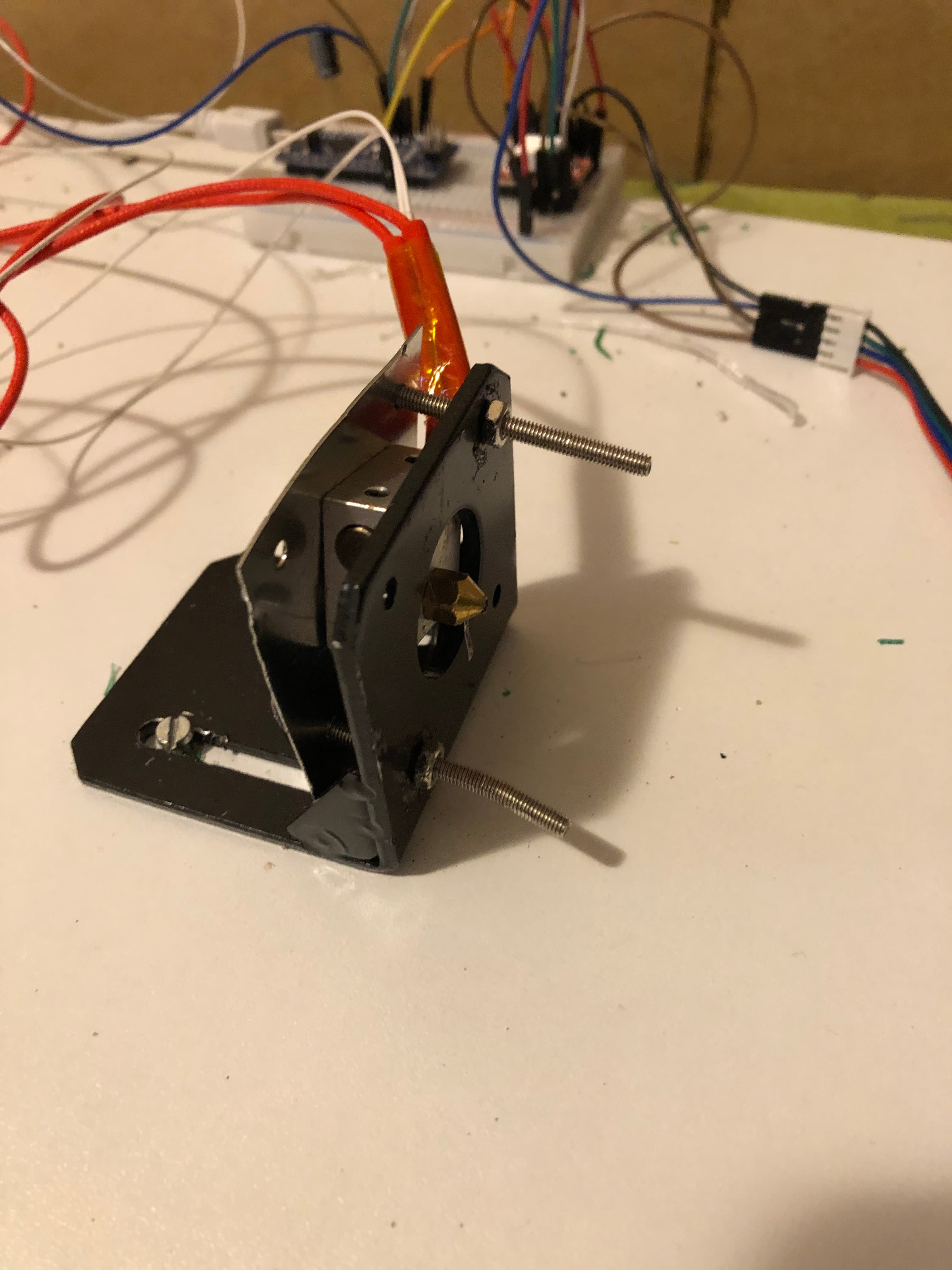
The machine was built mostly from recycled 3D printer components and used a custom Arduino-based PID temperature controller running on a repurposed 3D printer motherboard. The system cuts PET bottles into continuous strips, heats and reshapes the plastic into approximately 1.7 mm filament, and automatically winds the finished filament onto a spool using a stepper-motor-driven mechanism.
The produced filament can be used to print many different items, from practical household accessories to toys and prototypes. One PET bottle usually produces around 25 grams of printable filament, making it a simple way to turn waste plastic into something useful.
My Role
This was mainly a solo project that I designed, built, programmed, and tested independently.
I designed the mechanical components in Onshape and reused hardware from old 3D printers to build a working filament-production system. For the electronics, I developed a custom Arduino-based PID temperature controller that regulated the heating element through a MOSFET-driven power stage. This allowed the machine to maintain the stable temperatures needed for consistent filament production.
I was also responsible for all prototyping, assembly, testing, troubleshooting, and system optimization. During development, I went through multiple design iterations, improved the bottle-processing workflow, and made the filament winding and extrusion systems more reliable.
I also presented the project to more than twenty students at my school, where I explained both the engineering behind the machine and its environmental purpose. The presentation gave me useful feedback that helped improve parts of the design and started discussions about sustainability and recycling within the school community.
Learnings and Challenges
The project involved several technical challenges that required a lot of experimentation and testing.
One of the first obstacles was learning how to work with MOSFETs. Since this was my first project using high-current switching electronics, I initially ran into failures caused by incorrect wiring and control methods. Through research and testing, I gained a practical understanding of how MOSFETs work and eventually created a reliable power-control system.
Another major challenge was tuning the PID controller. Early versions often overshot the target temperature and had trouble keeping the heating stable. After repeated testing and adjustment of the proportional, integral, and derivative parameters, I managed to achieve stable and accurate temperature control.
Preparing bottles for processing was also harder than expected. The bottles had to be smooth and free from deformations before being cut into strips. After experimenting with different methods, I developed a preparation process using controlled heating and internal bottle pressure to restore the bottles to a more uniform shape before processing.
The project also improved because of the feedback I received after presenting it at school. Several students suggested ideas for improving the bottle-cutting mechanism, including using bearings to make the cutting more consistent. These discussions helped me refine the design and showed me the value of sharing engineering projects with a wider community.